

Ensure Expert Filtering Efficiency
We’ve all been there, staring at our HVAC system, wondering if it’s *really* time to swap out that air filter. Figuring out when to replace HVAC air filters can feel like a guessing game. You might put it off longer than you should.
Ignoring this task has some not-so-small effects. I’m going to walk you through what you should consider when it comes time to replace those filters. Understanding when to replace HVAC air filters depends on several factors in and around your home.
The Basics of Filter Replacement
The most common suggestion is to change your filter every three months. This is a good starting point. Although this can vary.
Standard 1-inch fiberglass filters should often be changed every month. The filter of your unit should be changed at least every three months by the homeowner, and sometimes more, according to NACHI.
Filter Types and Lifespan

The type of filter you use greatly impacts its lifespan. There are generally two types you can select from; fiberglass and pleated.
Fiberglass filters are much cheaper, but they don’t trap nearly as many particles. Because of their design, you generally need to change these about every 30 days.
On the other hand, pleated air filters are a bit pricier upfront. But, they’re much better at trapping dust and other things and could last up to 90 days.
MERV Ratings Matter
MERV stands for Minimum Efficiency Reporting Value. It’s a measure of how well your filter traps particles.
The EPA goes further in-depth on MERV ratings and how they affect how much your filter will actually capture. Filters with a rating of MERV 16 or lower, help give better indoor air quality, says the American Society of Heating, Refrigerating, and Air-Conditioning Engineers (ASHRAE).
Factors That Increase Filter Replacement Frequency
Changing HVAC air filters every three months can get expensive for some people. While it’s fine for some, it´s completely necessary for others.
Consider if you have multiple dogs, live by major construction or high-traffic areas – those homeowners will need to change them far more often. A filter helps keep the house air clean.
Pets in the Home
If you have pets, you should consider swapping out your filter every two months. This applies especially if they have longer hair, have multiple animals, or shed a lot.
For households with animals, changing your air filters more often makes more sense. Pets bring dirt, pet dander, and all kinds of things that can trigger people’s allergies, so think about replacing the air filter around every 60 days.
Allergies or Respiratory Issues
If anyone at home has bad allergies, it’s a good idea to change the HVAC air filter every six weeks. Those who deal with COPD, asthma, or respiratory issues, might want to do it sooner, though.
Medical associations, including the American Academy of Allergy, Asthma, and Immunology, advise swapping the filter every month. More air particles for people with respiratory issues or asthma means bigger problems. You have to swap out your air filter far more regularly, helping provide relief for any allergy sufferers in the home.
Location, Location, Location
Where your house is situated plays a large role. Your air filter, designed to block particles and dust, plays an outsized part in places next to farmland, dusty country or dirt roads, near building sites, or places with more allergens in the outdoor air.
Frequent HVAC airflow issues can come about because of where the location is and that makes knowing the location essential when changing filters out. Your furnace filter needs constant watching.
Beyond the 90-Day Rule
While the three-month rule is the most popular, other considerations change things. Knowing your individual living situation tells you so much.
Visual Inspection
Do a simple visual inspection of the filter monthly. Compare your air conditioner filter with a pure white paper sheet to check how things compare.
Other Signs
You might spot more dust on your vents, ceiling, walls, or fan blades, for example. It, or your AC struggles to hit the needed temps, shows your filter is way too dirty.
The Impact of a Dirty Filter

Ignoring capturing airborne particles, including dust or things like pollen, is one of the many results when you don’t stay on top of air filter maintenance.
System Strain
A clogged filter forces your HVAC system to work harder. This drives up energy bills and possibly causes it to fail sooner.
Poor Air Quality
A dirty filter cannot filter indoor air pollutants correctly. You’ll breathe air full of allergens, causing health problems and issues to pop up.
Filter Replacement Schedules: A Quick Guide
Here’s a table summarizing recommended filter replacement schedules:
| Situation | Replacement Frequency |
|---|---|
| Standard (No Pets, No Allergies) | Every 3 Months |
| Pets in the Home | Every 2 Months |
| Allergies or Respiratory Issues | Every 4-6 Weeks |
| High Pollution or Construction Area | Every Month or More Frequently |
Practical Tips and Reminders
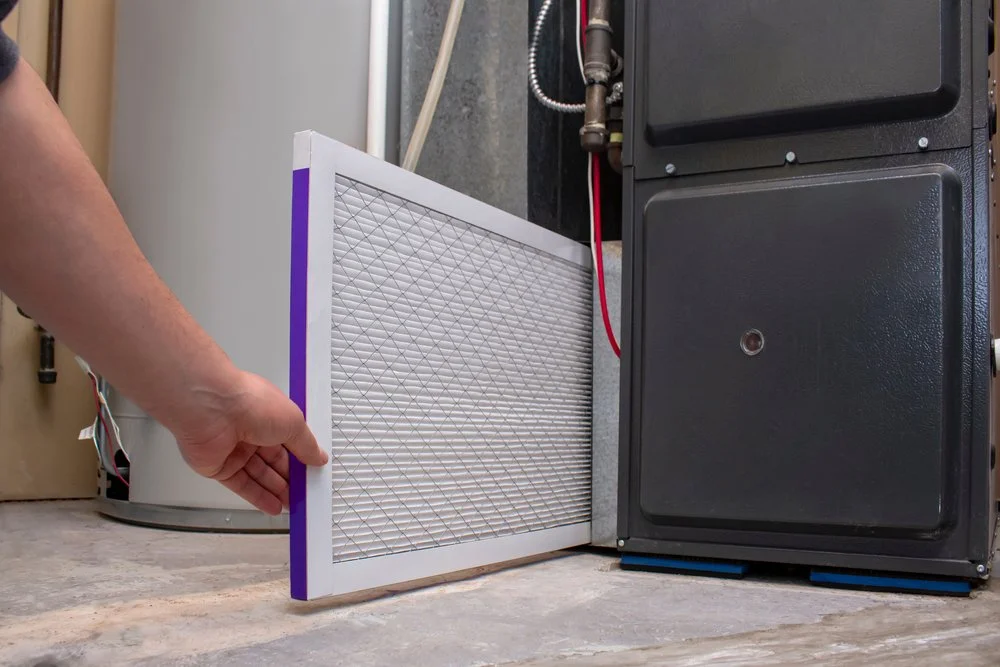
Set Reminders
We’re often busy, and changing the air filter goes overlooked or completely forgotten. Use a phone, wall, or an app-based calendar or notes app to alert you. Setting a reminder for air filter replacement every month is important.
Consider a Subscription
Some filter brands help you not forget by creating a delivery schedule and reminder all in one. An air filter subscription can save you a headache.
So you can make sure you don’t forget.
Proper Disposal
Check with your filter or AC brand. Learn how to correctly recycle used air filters when replacing the filter.
Be mindful of outdoor air quality when disposing.
Frequently Asked Questions (FAQs) about Air Filters
What is a MERV rating?
MERV stands for Minimum Efficiency Reporting Value. The MERV rating indicates the filter’s ability to capture particles.
Higher MERV ratings mean the quality filter can trap smaller particles. But, very high MERV ratings can restrict airflow.
How do I choose the right size air filter?
The correct filter size is usually printed on the frame of your old filter. If not, measure the length, width, and thickness (depth) of the filter.
Common sizes include 16x20x1, 20x25x1, and 14x14x1, though many variations exist. Always refer to your HVAC unit’s manual.
Can a dirty air filter make me sick?
Yes, a dirty air filter can contribute to poor indoor air quality. A dirty filter can worsen allergy and asthma symptoms.
It allows air pollutants and dust mites to circulate. Maintaining optimal air quality is essential.
What happens if I don’t change my air filter?
If you don’t change your air filter, your HVAC system will have to work harder. This leads to increased energy consumption and potentially higher energy bills.
It can also lead to system damage and reduce the lifespan of your heat pump. Forgetting about frequent filter changes can be costly.
How can I tell if my air filter is dirty without looking at it?
Aside from a visual inspection, there are several signs that indicate a dirty air filter. Reduced airflow from your vents or excess dust accumulation are strong signs.
If your air conditioning or heating is running longer than usual, that could be a sign. You want efficient operation with a clean air supply.
Are there any benefits to using a higher MERV-rated filter?
Higher MERV-rated filters, especially highly rated ones, capture more particles. A quality pleated filter with a high MERV rating can significantly improve air quality.
This is especially beneficial for those with allergies or respiratory issues. If you are in an area with poor outdoor conditions, then this could be more beneficial.
Can I clean and reuse my air filter?
Most HVAC air filters are not designed to be cleaned and reused. Always check your filters to know if they can be reused.
Attempting to clean a disposable filter can damage it. It will also reduce its effectiveness.
How does outdoor air quality affect my indoor air filter?
Poor outdoor air quality, such as during wildfire season or in heavily polluted areas, can significantly impact your indoor air filter. If the air outside your home’s air quality is poor, your filter will clog more quickly.
In these cases, more filter check events and air filter replacements are needed. Smaller homes are affected more.
Where can I find more information and assistance?
Contact customer service for your HVAC system’s manufacturer or reach out to a local HVAC professional.
Many manufacturers provide an email address for support. You can also reach out for information on air conditioners in general.
When to Replace HVAC Air Filters: Final Thoughts
Knowing the schedule and rules of when to replace HVAC air filters gives many factors to help with keeping a healthy and low-cost operating AC. It’s about saving money, and breathing easier air, all by regularly checking that old air filter.
There’s an art to filter maintenance. Your home’s scenario guides that strategy and requires consideration.
Contact us today for more information or to schedule a free consultation.


